Usually Sacramento is something I breeze through on my way to Tahoe. This day was different. This day we had a destination in mind. Sacramento, 1839. We were headed to Sutter’s Fort – New Helvetia – to learn about some gold rush history and what shaped California to be the state it is today.
As we followed the route on Waze, the computerized voice told us our stop was ahead. The boyfriend and I didn’t expect it to be so in the middle of things, surrounded by offices, government buildings, and medical offices. The fort itself was a little oasis with a pond gurgling with fountains and surrounded by flowering trees along the side. Sacramento graced us with a beautiful sunny day in the middle of February about a week or two before a freak snow storm that white washed the city. Today, the only thing white washed were the walls of the fort making the dark wood of the towering doors stand out that much starker.

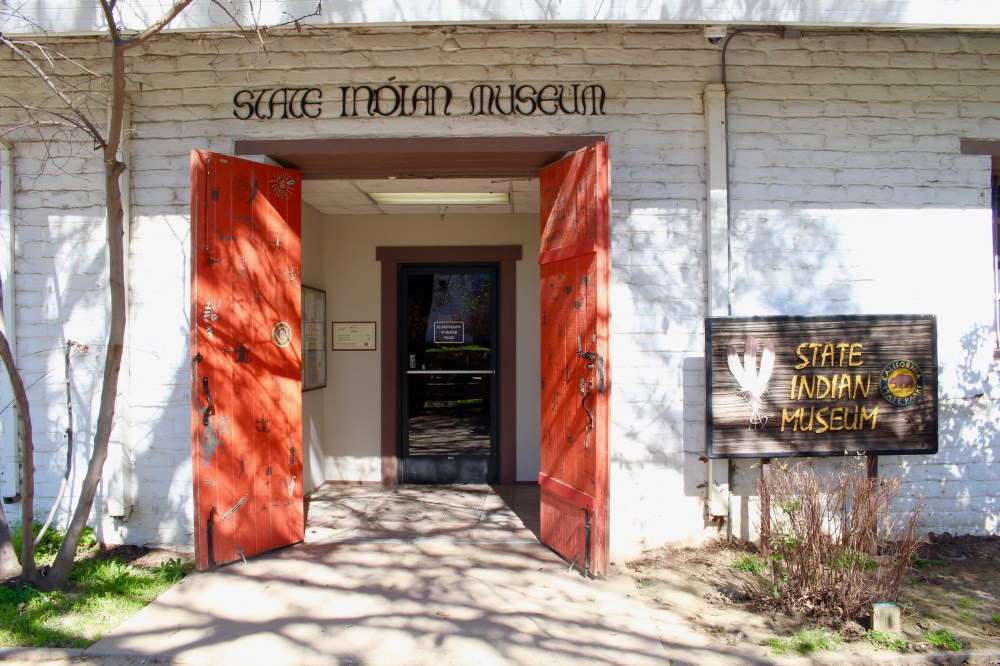
Next door to the fort was the California State Indian Museum, as if to remind us that there were people here long before the fort and that these people still had and have a presence in Sacramento and beyond. The museum highlighted all the different tribes across the state as well as ceremonial garbs, the American Indian way of life, images from across the century, and more. The park ranger or museum attendant, whatever you would call him, was rather friendly and knowledgeable about the books featured in the gift store. He exuded pride in his job reminding a child to be careful around the art by Harry Fonseca in the lobby as the boy loomed so close to it we all wondered if the coyote was going to trick him into the painting. The man reminded the child to revere the art, that’s what it was there for.
Once we were inside the fort, the displays were your usual historical tour fare with reproductions of rooms, offices, blacksmiths shops and what not. The inside of the general store looked like a a hipster boutique in Williamsburg and I wanted to buy everything inside of it.


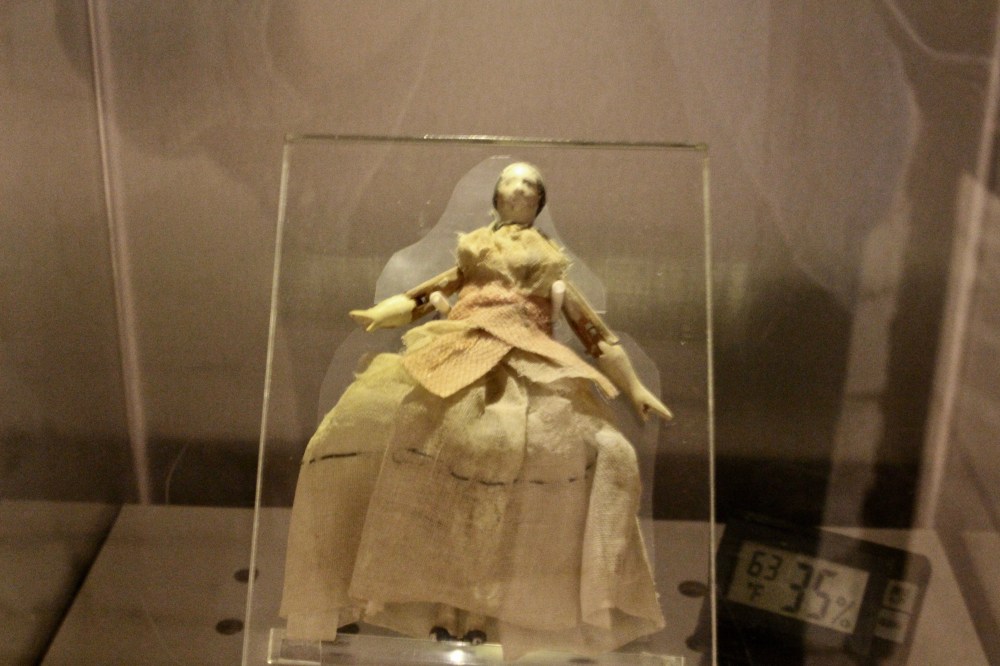
The real gift shop paled in comparison with boxed goods from China – quills with ink and nibs, fools gold in pouches and reproductions of Patty Reed’s dolly in honor of the real one under glass in temperature and light sensitive box in the exhibit.
While the walls might have been whitewashed, the history wasn’t. The CA Historic Parks made a great display, being very sensitive to the fact that Sutter was a colonialist, taking land from the natives and using a labor force to build his fort. The display featured information on the Native Hawaiians who came over to help him, an African-American man named Jackson that he hired multiple times as a cooper and is considered one of “the first persons of African descent to live in the Central Valley,” as well as information about any woman who would have been in Sutter’s fort at some point in its history. They did not glorify Sutter, sharing info about his debts and his trading of indigenous children as a workforce. They also showed his generous side, taking the Donner party in and feeding them to his own financial detriment, also paying a wage to his laborers, even if it was small and still back breaking. I was happy to see this more encompassing people’s history of Sutter’s Fort, having been a little nervous at first that our visit would just be the glorification of more white, male history. Instead, the timeline of California history spread out before us from a native land for American Indians to a Mexican province full of Californios – Spanish cowboys – and finally to the gold rush boom it became bringing people from all walks of life and changing it for the worst or better, depending on who you were to ask.
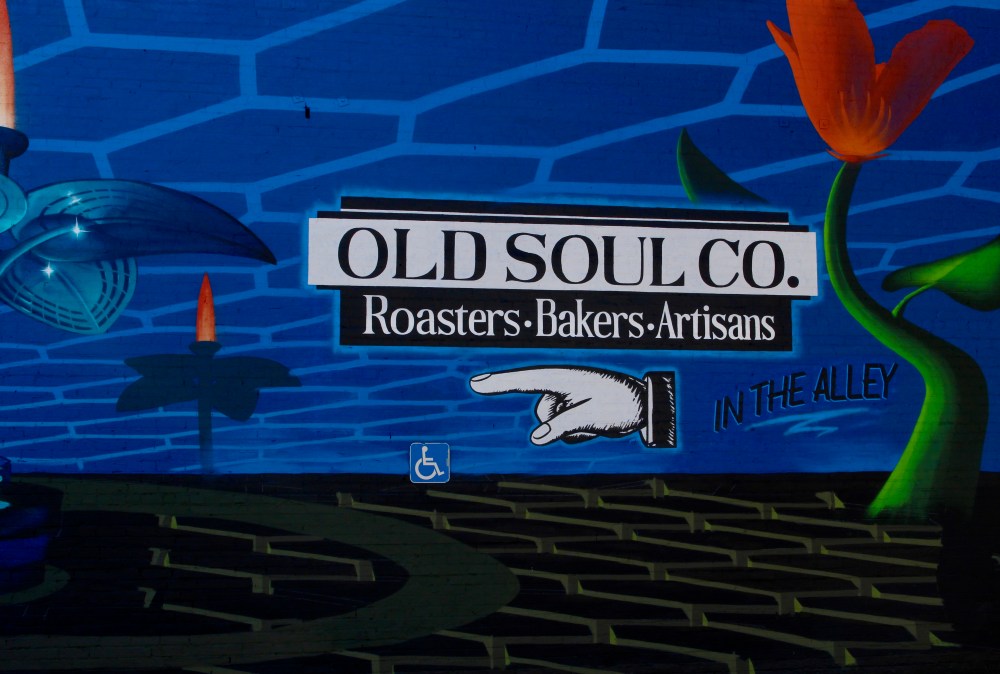
We left and went about a half mile away to the Handle District, a trendy neighborhood in midtown. The strip had its usual bar-forward, overly priced restaurants, a smattering of breweries with people sitting outside on the sunny but chilly day to drink their brews and eat off metal baking sheets, the coffee roasters hidden in a back alley with a mural pointing the way and the smell of hops and coffee intermingling in the parking lot between the brewery and the roaster. An old woman in a large red hat, red coat and fleece pajama pants sat reading in the alley in front of the coffee shop while three hipsters mingled in front of the bike shop next door clutching their handles as one might idle with their saddled horse.

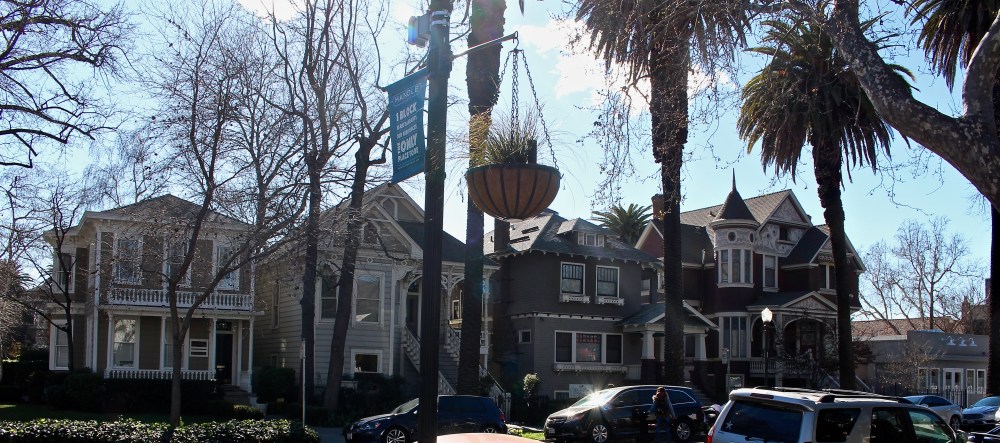
As we walked back to the car, we noticed that the dome of the capital rose into view down the street – Capitol St. to be exact – and we realized how close we were to downtown and the epicenter of CA government. The street was lined with old Victorians and trees crossed their branches in an arch above us. Some trees were covered in knitting bombs while another held a small black bird cage in its boughs, holding an old red alarm clock with a sign beneath that said “Don’t forget to look up.”
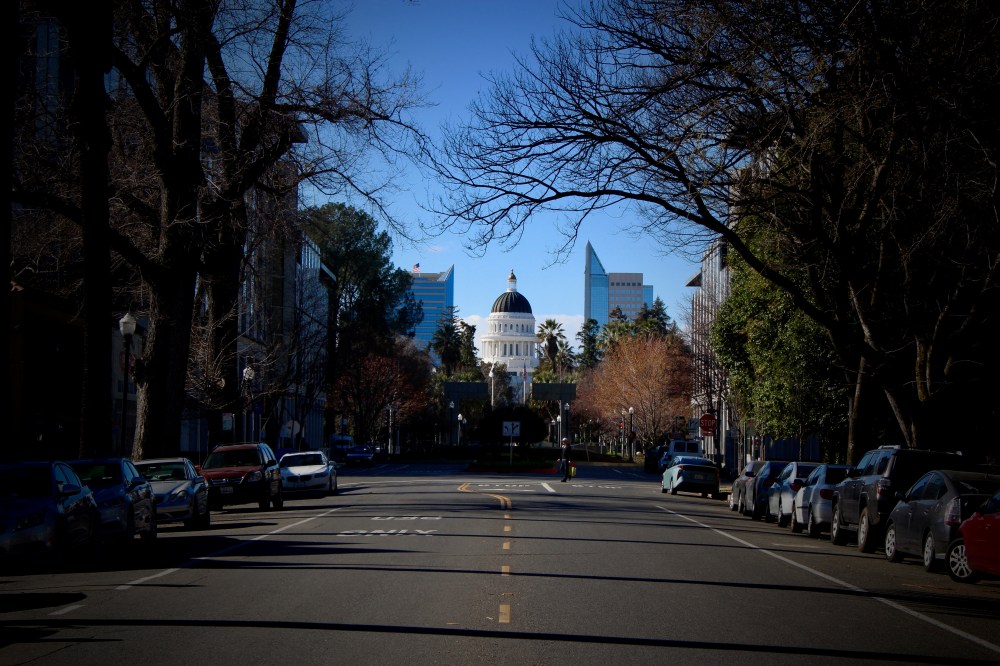
The city felt new and old at the same time. A frontier town and staid capitol. Small, smooshed together and sprawling with farm land and interconnecting freeways on its outskirts riding over the diverted American River below. This was the mixture that is California. I’m five generations California. I feel more Californian than I do American or Western European as my genetics would place me as. Yet, witnessing it’s history – history that I may not have paid attention to in high school – reminded me that any place is ever shifting, its identity changing, being taken from, expanding, the language moving, the alliances muddied. How can people say things like build a wall and separate ourselves even more from something we once were? Had the Mexican-American war turned out differently all of us Californians would be Mexicans? Some already are. Others are truly Californian in their blood – the people who came first, before the explorers, before the settlements, before it all. I could take pride, instead, in the fact that California has always had a rich, diverse history, one that, while not always welcoming to all, could one day fulfill its potential to be the great progressive, open-minded state it touts itself to be. That’s my hope at least. A gold rush boom of values, of empathy, a place welcome to all to build a better world. Wouldn’t that be lovely? Maybe I’m just California Dreamin’ but it would be something worth believing in it, wouldn’t it?
 Goode Travels